

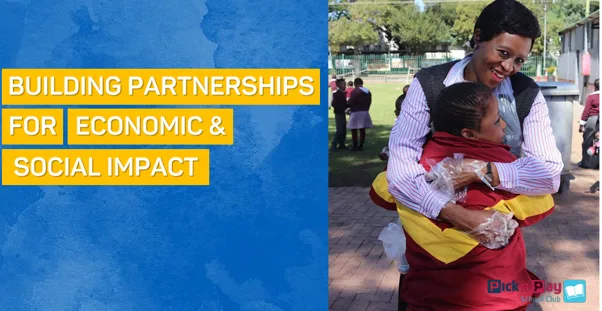
How can businesses move beyond once-off donations to create sustainable, meaningful change in communities? This was the central question explored by Catherine Bothma during her presentation to the Rotary Club of Waterfront, titled “Beyond CSI: Building Partnerships for Economic and Community Impact”.
Mymoena Ismail warmly introduced Catherine, who currently runs the Pick ‘n Pay School Club, South Africa’s largest brand-funded educational resource programme. Through her work, Catherine also delivers school and community programmes for leading brands, including Reckitt, Danone, Polyco and BIC.
We were delighted that Catherine’s colleague, Vaughan Pierce, joined us for the presentation.
The Legacy of Putting People First
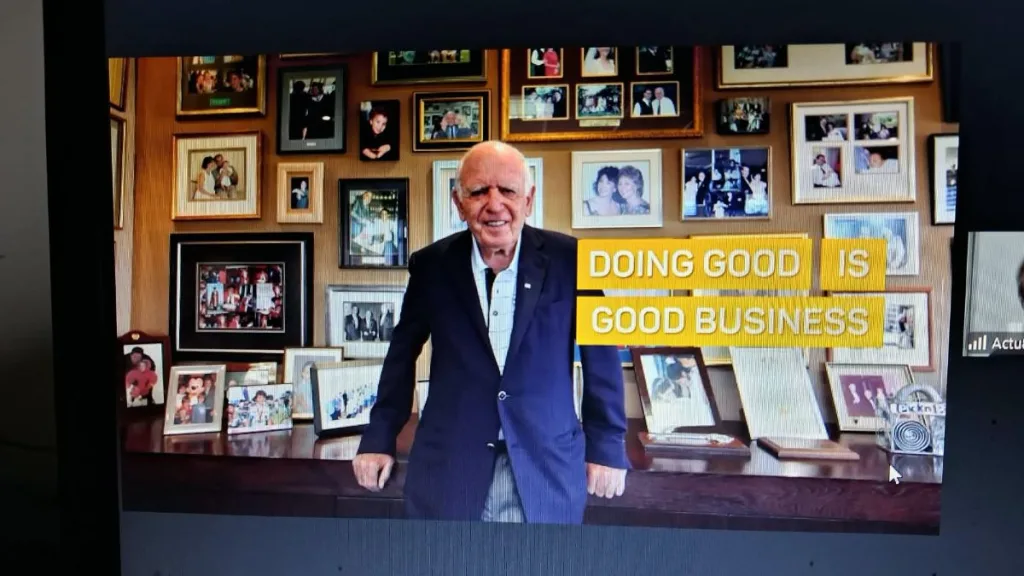
Catherine’s presentation reflected on the legacy of Pick ‘n Pay founder Raymond Ackerman, whose leadership was shaped by a strong commitment to putting people first.
Ackerman was recognised not only for his business leadership and entrepreneurial success, but also for standing against the injustices and discrimination of the apartheid era.
His approach demonstrated that business can be a powerful force for positive social change. He also understood the value of turning challenges into opportunities – an approach that remains relevant for businesses seeking to make a meaningful contribution to society.
Why Traditional Corporate Social Investment Is Changing
Catherine highlighted several challenges facing the corporate social investment (CSI) and community development landscape.
Donor fatigue and increasing demand: Organisations face more requests for support, while the pool of regular donors remains limited. Businesses are also under pressure to demonstrate tangible results from their investments.
Pressure on budgets: When economic conditions become difficult, donations and community contributions are often among the first areas to face budget cuts.
Loss of experience and opportunities for young people: Experienced professionals are leaving the industry, taking decades of valuable knowledge with them. At the same time, young people struggle to access their first jobs, mentors and opportunities to enter the workforce.
Schools under increasing pressure: Schools are expected to do more with fewer resources, even as the needs of learners and communities continue to grow.
The need for support has not disappeared. What has changed is the strategy required to deliver it.
Moving Beyond Donations to Strategic Partnerships
Catherine’s central message was that businesses need to evolve from traditional CSI activities towards partnerships built around shared goals and long-term value.
Rather than treating community investment as a once-off donation, businesses can develop relationships that become part of their broader strategy.
Effective partnerships have several important characteristics:
- Shared objectives: Community impact is connected to business purpose and priorities.
- Long-term commitment: Relationships are developed and sustained over time rather than limited to once-off contributions.
- Measurable outcomes: Progress and impact are assessed, creating accountability for everyone involved.
- Shared participation: Schools, communities, businesses and other partners all contribute to the success of the initiative.
- Mutual value: Partnerships are more sustainable when all participants benefit and have a meaningful stake in the outcome.
The result is a shift from simply providing financial assistance to building relationships that deliver lasting economic and social value.
Pick ‘n Pay School Club: A Partnership in Action
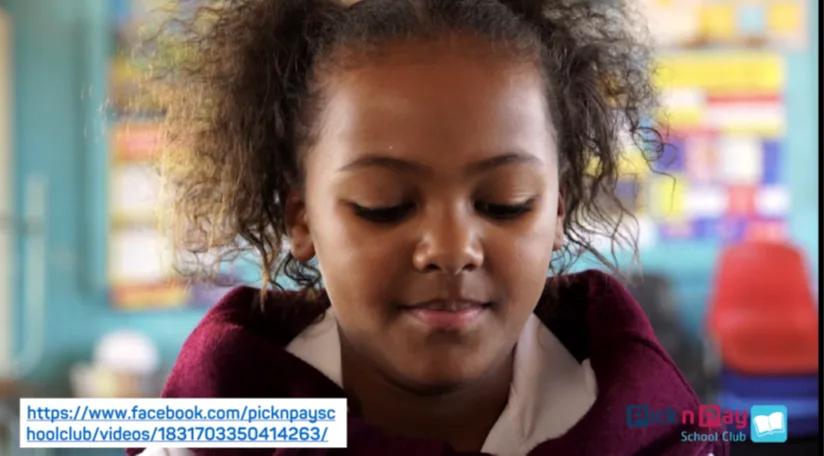
A practical example of this approach is the Pick ‘n Pay School Club, now in its 23rd year.
The programme provides educational resources and creates opportunities for businesses to participate in supporting education and the development of future generations.
According to the programme figures shared during Catherine’s presentation, it reaches:
- 118,300+ teachers
- 2,535,000+ learners
- 3,802,500 guardians
- 3,380 schools across South Africa

Its reach extends across private, urban, suburban and rural schools, demonstrating how partnerships between business and education can support communities on a significant scale.
The programme illustrates how a sustained relationship between brands and schools can create value beyond a financial contribution – connecting businesses with educational needs while providing schools and learners with additional resources.
A Valuable Perspective for the Rotary Community
Catherine’s presentation offered an important reminder that sustainable community impact requires more than good intentions. It needs collaboration, commitment, clear objectives and a shared understanding of what success looks like.
For service organisations such as Rotary, this message is particularly relevant. Building effective partnerships with businesses, schools, foundations and communities can help extend the reach and sustainability of projects.
A successful partnership is not simply about who contributes the funding. It is about what everyone brings to the table, what they achieve together and how the relationship can continue to deliver value over time.
A sincere thank you to Catherine for an insightful and thought-provoking presentation. Spiro expressed our appreciation and extended a warm invitation for Catherine to join us again whenever she finds herself in Cape Town on a Friday!


